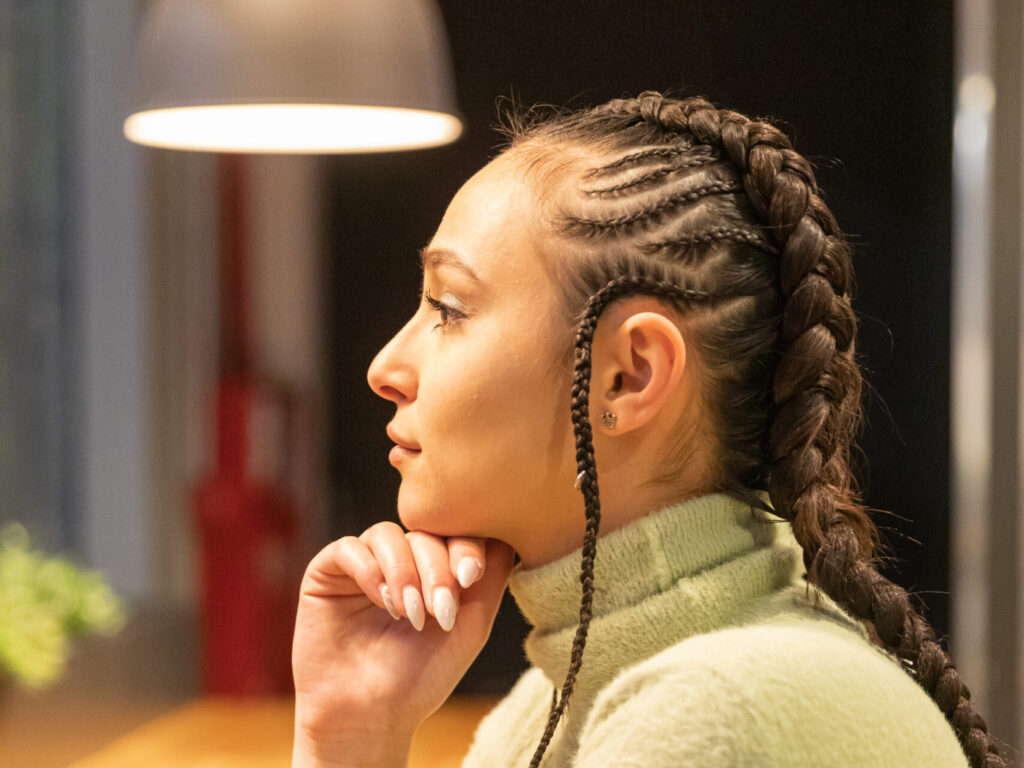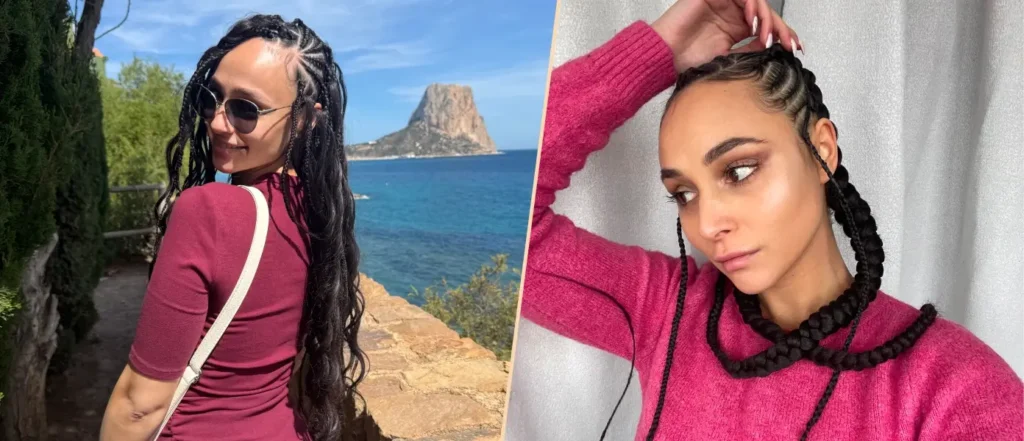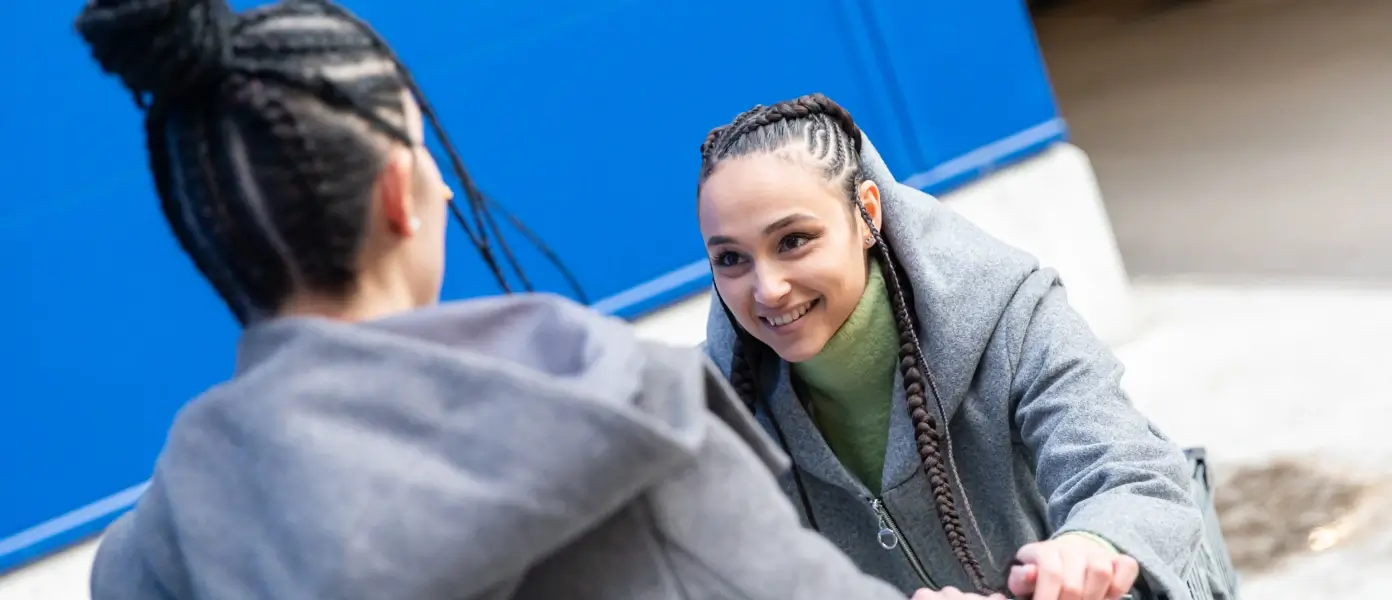


Braids are often called a „protective hairstyle,“ but that doesn’t mean that every braid is automatically safe for your hair.
The truth is simpler: it's not the braids themselves that damage the hair. Factors like the way they're made, how heavy they are, how tight they are, and how long they're worn matter much more.
Properly braided and unbraided braids do not harm your hair; on the contrary, they limit daily combing, heat treatment, and mechanical friction.
What does "protective hairstyle" mean?
A protective hairstyle aims to reduce daily manipulation of natural hair by:
- we don't comb it daily;
- we use less heat;
- we remove permanent styling;
- the edges are less exposed to friction;
- hair becomes easier to maintain.
But even a protective hairstyle needs to be done with the right technique and cared for properly.
When can braids damage hair?
When they are too tight
This is one of the most common mistakes. If you experience severe pain, burning, pulling, tenderness, or tension around your forehead and temples during or after braiding, notify your hairdresser immediately. This discomfort should not be considered a normal part of the hairstyle.
When braids are too heavy
Long braids with lots of Kanekalon look impressive, but weight also matters. The heavier the hairstyle, the more strain it can put on your natural hair.
Special attention should be paid to thin hair, weak ends, the hairline and temples, or already damaged hair. More weight does not necessarily mean a better hairstyle.
When we wear our braids too long
Braids are not designed to last forever.
Over time, natural hair grows out, the roots loosen, sebum and products accumulate, the hairstyle begins to change, and the weight may be distributed differently.
When we don't take care of our scalp
Braids don't mean "I don't have to wash my hair."„
The scalp continues to produce sebum and sweat. Proper washing and drying are part of good maintenance.
When we take off our braids incorrectly
The timing of removal is just as important as the time of insertion. We should never pull on tangled sections, pull out knots, detangle aggressively, or use force on natural hair.
After untangling the braids and removing the material, it is MANDATORY to comb the hair!
This is how we remove the hairs that have fallen out during the wearing period. It should be noted that after taking it off it is normal to see more hairs, but this is because they have simply remained in the braid instead of falling out during daily brushing.
And why does it sometimes seem like hair has grown a lot?
This is one of the most common questions at the salon. Braids don't magically make hair grow faster.
But when hair is protected from constant manipulation and the ends are less exposed to mechanical damage, it is possible to retain more of the length that has already grown. This is the difference between growing hair and maintaining length.
How to make braids more gentle?
- Proper tension – the braid should be stable, not painful.
- Appropriate weight – we choose the length and amount of Kanekalon according to the natural hair.
- Proper sectioning - the weight must be distributed evenly.
- Good preparation – hair must be in proper condition before braiding.
- Scalp care – cleanliness and comfort are part of the hairstyle.
- Rest – after removing the braids, if necessary, give your hair and scalp time to recover.
No compromises
Beautiful braids don't have to come at the expense of your natural hair. Our goal is to create hairstyles that are beautiful, comfortable, and tailored to every hair and scalp type.